
thomas f. defrantz ► Jess Curtis: From Ice/Car/Cage to ICE. CAR. RAGE.
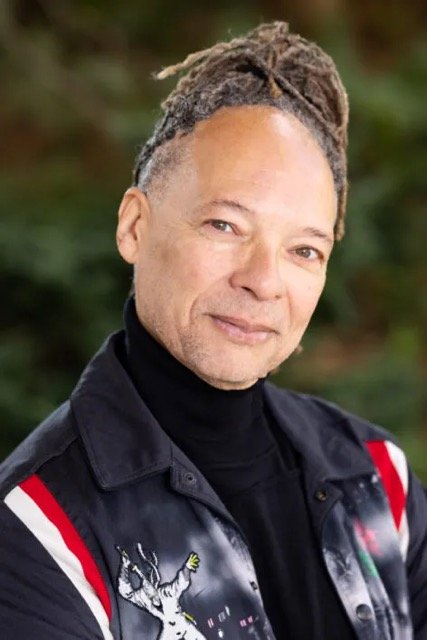
Thomas F. DeFrantz
Jess Curtis: From Ice/Car/Cage to ICE. CAR. RAGE.
1997 to 2026
The Bay Area commands a storied position in the United States as a site of deepened social concern among citizens; Jess Curtis/Gravity has always contributed to this reputation of direct action through the theatrical arts. Among dance artists, Jess engaged an outstanding commitment to marginalized identities as partners to performance making, even as his own visible presentation as a straight white man might have seemed to preclude caring about other people’s problems. Curtis and Gravity moved with care towards theatrical renderings of the longing that we might all engage as we wonder towards a better world where more are welcome and resistance to normativities offer a way forward for civil society.
No surprise then that Curtis answered the call of dancemaker Keith Hennessy as one of “two straight collaborators” to make a watershed work commissioned by Krissy Keefer & Anne Bluethenthal for the emergent San Francisco Lesbian and Gay Dance Festival. Ice/Car/Cage encompasses the opaque 1997 political moment of queer masculinities, the spread of HIV/AIDS, and the need to lift our heads out of the sand in mournful play if there is to be a tomorrow to share.
Ice/Car/Cage is ripe for re-imagination by GRAVITY and creative investigation by artists of color to speak back to the trio who originated the piece. First, a description of the old way. The trio of performers appear as clowns of a socio-critical type, faces gently painted. Curtis begins as a laborer on a ladder, Village People-style, descending only to launch into an unlikely balletic sequence of stretching and unfolding to a recording of misrendered Chopin piano music. Here, the unexpected and obscure are always to be nearby. Hennessy — the one gay|queer artist of the white-presenting male trio — appears half-naked and feral, consensually sequestered in a cage. Beckman rocks a punk-clown vibe, not too far from visions of a Clockwork Orange dystopia, fussy without cause and with a certain rascally menace. Curtis dances in the distance, Beckman releases Hennessy, and the unfolding of gaysex metaphors takes our breath away.
Hennessy becomes a mechanic, servicing the needs of Beckman to get a broken-down car to run by itself. Driverless, the car circles aimlessly, allowing the men to employ it for their own erotic play. They bounce on it, roll over and under, lean against and caress the car-as-bed, experimenting as we all might in an unscripted encounter. We witness Contact Improvisation with the car as a partner, allowing for surprising moments of clumsy skirmish and physical consummation, with outlandishly strong circus skills of acrobatics and balance on full display.
The car circles a block of ice, a prop that bears obvious new meaning in the current 2020s trumpregime. But in the performances of the 90s, the ice stands in for the chill of death surrounding seroconversion as antiretroviral therapies had just become available for some of our queer brethren. When Jess removes his shirt — as Jess liked to do in performance — and embraces the block of ice, we all feel the chill of dissociation surrounding the touch of skin to other matter. As Beckman performs what sounds like an Adhan, or call to prayer — praying for or against the queers? — Hennessy and Jess mount each other and the ice, in an unexpected and inevitable dance towards the morgue where death will eventually reciprocate and hold the body.
But not yet. Hennessy returns to the queer cage, now placed on top of the car going nowhere, to be driven away by Beckman. Jess ends the piece then alone, a shirtless straight ally, chopping at the ice and its chill as he can.
**
The work demonstrates its politics through metaphors of motion, costumes, and props. A caged feral man, released and then closeted as a (gay) mechanic, sets the car in motion, engineering a platform for queer physical exploration without emotional intimacy. Using the car as a forum for physical danger, the men do not ‘play safe;’ but rather engage risky behaviors familiar to many queers, then and now. A shift to the shirtless embrace of the ice block, and the literal piling of men, body-to-body-to-ice, offers clarity of compositional intention here as metaphor for social effects of HIV/AIDS, even as a playful backspin on the ice by Curtis suggests the will to erotic power that queers always command. With a moment of intimacy shared on ice and damages done, the gay goes back to the cage, leaving the ‘straight’ comrade to offer physical resistance to the ice block that now threatens him too, as it has always threatened anyone nearby.
**
And so yes, we must rethink this work in the current moment of the trumpregime to accommodate rage against depleting allyship and again-rising fascisms. Disgustingly, racial fascism is foundational to the United States; the fact of slavery demonstrates a grand national ability to exercise fascism against Black people and queers of color across hundreds of years. Working now in 2026 with a platform created by GRAVITY co-artistic director Gabriele Christian, we can engage the compelling structure of the work to speak to latter-day formations of ICE, a white-supremacist abomination that represents death to so many Black and Brown people who are unconscionably harassed, injured, and deported. For non-binary and trans queers of color the stakes are even higher: our placements in the cages of undesirability and our rage at the fearmongering and rampant disregard today loom just as large as militantism of the ACT-UP era.
Christian offered a provocative solo prelude, “Numbing Agent,” in March 2026 as prelude to the newly minted ICE. CAR. RAGE. Following Jess’s lead, Christian demonstrated the performance underneath the performance in seductive drag-show clowning followed by disrobing and an encounter with ice. Expert Bay Area-based interpreters jose e. abad, Styles Alexander, and Clarissa Rivera Dyas, each of whom worked directly with Jess before he left us, will surely bring forward the demand for physical involvement in the ongoing fight for social justice that is always already here.
We sorely miss Jess. Jess was compelled to participate in discourses of difference and disability with the care and caution that distinguish the best of allies, and especially straight white men who intend to make a difference in a world wrought by white supremacies, patriarchies, and heteronormativities. Jess moved with a post-punk irony, making fun of his own body even as he displayed it again and again in performances, encouraging our gaze from the audience and neutralizing its seeming social allure. Jess created platforms, including GRAVITY, that allow artistry to move erratically and queerly through registers of disability and triumph; through Black Thought and critical race theory; and through circus arts and experimental performance as levers for theatrical communion. ICE. CAR. RAGE. extends the provocations of Ice/Car/Cage. to bring Jess’s concerns of inclusion into this part of our shared time on the planet. We miss Jess, and in response we engage the RAGE that answers this current political moment of mediated distraction to be refused by action that reminds us how dance matters as an urgent vector of commitment to renewed focus and social transformation.
Jess with Keith Hennessy and Jules Beckman
Ice Car Cage
Collaborative choreography, design, performance by Jules Beckman, Jess Curtis, Keith Hennessy; Commissioned by SF Lesbian & Gay Dance Festival. Additional performances presented by SF Art Institute, Yerba Buena Center for the Arts, ODC Theater.
– thomas f. defrantz
slippage.org
May 25, 2026
Thomas F. DeFrantz
Thomas F. DeFrantz directs SLIPPAGE: Performance|Culture|Technology; the group explores emerging technology in live performance applications. He believes in our shared capacity to do better and engage creative spirit for a collective good that is anti-racist, proto-feminist, and queer affirming.
Creative Projects include Queer Theory! An Academic Travesty commissioned by the Theater Offensive of Boston and the Flynn Center for the Arts; fastDANCEpast, created for the Detroit Institute for the Arts; reVERSE-gesture-reVIEW commissioned by the Nasher Museum in response to the work of Kara Walker, January, 2017.
Books: Routledge Companion to African American Theater and Performance (with Kathy Perkins, Sandra Richards, and Renee Alexander Craft, 2018), Choreography and Corporeality: Relay in Motion (with Philipa Rothfield, 2016), Black Performance Theory: An Anthology of Critical Readings (with Anita Gonzalez, 2014), Dancing Many Drums: Excavations in African American Dance (2002), and Dancing Revelations: Alvin Ailey’s Embodiment of African American Culture (2004).
Convenes the Black Performance Theory working group as well as the Collegium for African Diaspora Dance, a growing consortium of 325 researchers committed to exploring Black dance practices in writing.
Recent teaching: University of the Arts Mobile MFA in Dance; ImPulsTanz; New Waves Institute; faculty at Hampshire College, Stanford, Yale, MIT, NYU, University of Nice. Has chaired Program in Women’s and Gender Studies at MIT; the concentration in Physical Imagination at MIT; the Department of African and African American Studies at Duke; and served as President of the Society of Dance History Scholars.
DeFrantz acted as a consultant for the Smithsonian Museum of African American Life and Culture, contributing concept and a voice-over for a permanent installation on Black Social Dance that opened with the museum in 2016. Visit the website at slippage.org.
